
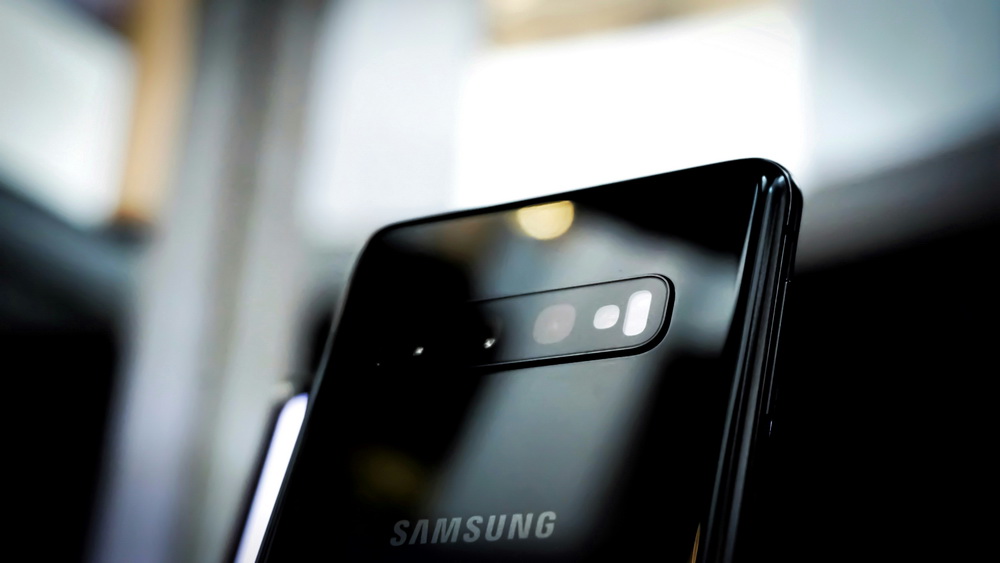
For the past 15 years, tech giants Apple and Samsung have been battling for the title of the world’s largest smartphone vendor. Samsung led for most of the time, but things changed in January 2023 when Apple took the top spot. Since then, the US tech titan has stayed ahead, holding the largest share of the global smartphone market for two years in a row. On the other hand, Samsung has continued to lose ground, reaching the lowest market share in a decade.
According to data presented by Jemlit.com, Samsung’s mobile phone market share sank to a 10-year low of only 19% in September.
The Last Time Samsung Led the Mobile Phones Market was December 2022
Although tech giants Apple and Samsung have both lost a significant share of the global smartphone market, mainly due to rising Chinese competition from Xiaomi, Vivo, and Oppo, the South Korean mobile phone vendor has definitely taken the worst hit.
According to Statcounter data, the last time Samsung led the mobile phone market was in December 2022, with a 26.9% share, far below the 33% it held in 2019. But things went sharply downhill from there. A year later, in December 2023, Samsung’s market share was 24.6%, and by end of 2024 it dropped even further to 23.3%.
However, it seems that 2025 might be one of the most challenging years for the Galaxy maker. After a slight rise to 23.5% in February, Samsung’s share fell for seven straight months, sinking to only 19% in September, a considerable 4.5% decline over this period. The last time Samsung suffered a drop like this was between February and November 2018, when it also lost around 4% of the market in seven months. Moreover, with only 19% of the market, Samsung has officially hit a ten-year low, as both Apple and Chinese competitors continue to eat into its position.
On the other hand, despite its market share falling by roughly 1.5% since the beginning of the year, Apple still holds 1.7% more of the global market than it did ten years ago. While far behind the two smartphone giants, Chinese competitors Xiaomi, Vivo, and Oppo have seen their market shares skyrocket during this period. Xiaomi and Oppo have both reported an eighteenfold increase, now controlling 9.7% and 5.6% of the smartphone market, respectively. One of the youngest competitors, Vivo, has seen nearly three times bigger growth in half that time, with its market share skyrocketing 48 times since 2020 and reaching 6.2% last month.
Asia is Samsung’s Weakest Spot, Market Share Down Over 20%
While Samsung’s market share has been falling globally, there are still some significant regional differences, with some countries more likely to turn back to the Galaxy maker than others.
For example, Statcounter data show Samsung held 31.2% of the European smartphone market last month, or 2.3% less than back in 2015. On the other hand, Apple’s market share in Europe jumped by 5.8% over the same period. The North American market saw a similar trend, with Samsung losing 2% and Apple gaining roughly 8% of the market over the past decade. However, Asia is a different story, and definitely Samsung’s weakest spot. Since 2015, its market share in the world’s largest smartphone market has plunged by a massive 20.8%, while Apple gained 3.1% of the market.